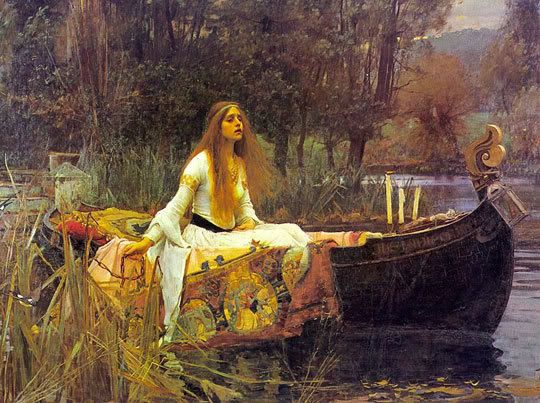
John Keats, the prolific romantic poet pinned for love all his life. Death which is so imminent took away his brothers and father at a very early age. This dispelled his ignorance of his birthright to be a poet. It kindled in him an epicurean taste for literature and he left all his aspirations to be a surgeon. He was also profoundly in love with a woman, but his love was never consummated. He rot in his own cocoon of sweet yet aching and unrequited love for his lady love. Therefore in most of the poems written by Keats the mood is set in such a manner so as to express his overwhelming grief and emotions.
Ode to autumn, one of the poems by John Keats expresses a mood of absolute serenity. In the poem he expresses the inability of an individual to accept the imminent changes in life. Amongst all the seasons, autumn can be said to be a season of contentment and the threshold to the treacherous winters. Keats ruminates and analyses the penultimate season in a cycle be it the cycle of life or nature. Autumn is the season when fruits ripen, crops are harvested, bees fill their cosy cells with ample honey for the ensuing winters and birds even make a move for the warmer places.
In the second paragraph he personifies autumn and describes how she seems to be lying lazily on a granary and drowsy by the smell of poppies blooming in the field. He glorifies the beauty of the season by comparing it with that of the delicate steps of a gleaner carrying a load of harvest across the brook. He also compared autumn to a demure beauty who was rambling about the countryside enjoying the mellow sun and fiddling time away by immaculately looking at the last drop of juice in the cider press. The poet uses these tools to bring in the mood of an idyllic afternoon and the sense of time maturing to turn into dusk at the end of the day.
The season is a mellow beauty with sights and sounds unique to itself which fills all the five senses of a person with heightened pleasure. But this pleasure is unlike the pleasure drawn from the vibrant colours of other seasons. This pleasure is eternal and sustains a feeble soul who is vanquished and prepares to depart from this world. Autumn provides solace and warmth from the ensuing chill of the winters. The last line in the poem which says about gathering swallows in the sky epitomises the fact that certain changes are imminent in life. One cannot help but accept the inevitable losses and be content with them. Autumn justifies and rightly illuminates the thoughts of Keats. He has merely used it as a metaphorical tool to highlight his vanquished and sad life.
 Lord Byron in this poem describes a muse of beauty. In my opinion the poet was bewitched by the beauty of the lady to a great extent and therefore he has penned down such lines for her which raise her to the pedestal fit for some heavenly creature. The beauty of the lady hasn’t been described explicitly by the poet. The poet instead indulges in comparison of the lady’s features to numerous natural instances and therefore we are presented an ethereal picture of the earthly lady. In the first stanza the poet has drawn parallels of the lady with that of night. According to Lord Byron the lady has a grace which is as mysterious and yet attractive as the night. It is devoid of the vibrant nature of the day but it still has some quality which seems to attract people around her. The mellowed light of the stars provide an ethereal quality to the night. Although night is usually meant to be synonymous to sadness and feelings rich in primordial sensations, a star studded night can also be regarded as an epitome of virgin beauty, a gift from the heavens. The poet dwells on the fact that the lady is so pure and innocent that the beauty which compliments the goodness inside, accentuates the richness inside her soul. He describes her beautiful hair framing her face and finds her locks extremely graceful like its mistress. He says that the dusky tone on her face cannot impair the grace oozing out of her body language. The grace in her lightens up her face and enriches her features. The lady as described by the poet is not a vivacious one. She instead has a placid look on her face and radiates an aura of serenity and sweetness. He raises the lady to the high altar by commenting that the qualities of grace and beauty have a very sweet dwelling.
In the second stanza the poet waxes eloquent of her smile and the glow on her face. Lord Byron says that the serenity and the softness on her face enrich her smile. He describes the lady to be having a bewitching smile which might have wounded a couple of young hearts and must have uplifted a couple of depressing situations. The poet concludes the stanza by putting forward this fact that the mistress of all these good qualities is devoid of any thought of pride or haughtiness. She not only owns immense grace beauty but she also owns a heart which is devoid of any harsh feelings. She is as pure as manna from heaven like the first drop of dew. She radiates goodness and spreads happiness all around.
 The Montagues and Capulets burning in the intense inferno of hatred had to bow down to the profound love of their children, Romeo and Juliet. The streets of Verona were no longer a witness to the infamous brawls between the feuding families after the fateful end of the star crossed lovers.
Romeo, the heir to Lord Montague, the sworn enemy of the Capulet’s, engaged his heart for the daughter of his father’s fiercest foe. He wasn’t dissuaded to stop loving Juliet inspite of knowing the fact that his beloved was the apple of the eye of the Capulets. In fact, after the seed of the prodigious love was sown in his heart, it grew unceasingly into a prosperous tree bearing blossoms of love and passion for the fair Capulet maiden. Juliet on the other hand also conceived an equally profound longing for the charming Montague. The lovers were smitten by each other’s charms and the vestiges of hatred were no more impediments on the way of the fateful lovers, to consummate their love. The audacity and purity of their love made them see no obstacle for they were sure that not even their own blood could stand in the way of their love. Therefore they rebelled against their families, defied the blood which had brought them up with immense love and affection. For instance in the discourse with herself, Juliet expressed her desire to give up being a Capulet if the young Montague would refuse his heirloom for her sake. In a nut shell she desired to surrender herself to the Montague if he requited her love for him.
The lovers decided to break the Gordian Knot and engaged themselves into a holy nuptial union. The audacious lovers knew no terror or pain. They were impatient as a little child to frolic in the new found pleasure of their nuptial alliance. Although the streak of impatience in the lovers persuade us to think about the physical longing of the young couple but the physical longing nevertheless had a streak of undying passion of immense love for each other. Romeo, who initially was dying in despair due to his unrequited love for Rosalynn, was now ready to relinquish the world around him and acquiesce the love shown by the fair Capulet. He found great joy in the fact that his bounty of love had finally found a destination, in Juliet.
Juliet’s remarkable love for the Montague has been brought out with immense clarity when she calls Romeo with contradictory names for he had slain her cousin. She was torn between love and responsibility. She could not assimilate the fact that Romeo had slain her own cousin but inspite of this she still loved Romeo with equal passion and affection. Juliet refused to tie the nuptial knot with the richest and the gallant young man in Verona for she already knew that she belonged to Romeo and they had already entered into the holy union.
Love, they say is blind. Although it sounds clichéd but Romeo and Juliet are still the epitome of pure and profound love. Romeo laid down his life and youth at the feet of the lady. He could not bear the shock and grief at the sight of an inanimate Juliet. The lovers had promised to be with each other till the end of eternity and it was proved by the step taken up by Romeo. They had the desire to relinquish the world behind them if it would come on their way and Romeo relinquished his life for his maiden, for he knew he could not live without the love of his life. Love, here as we see had a streak of madness and passion. The lovers are the standing examples of unconditional and undying love. Juliet also committed herself to death upon seeing her beloved’s body. The lovers thus left behind a legend for us to ponder in awe and admiration.
 The poem ‘The Tiger’ was composed by William Blake. William Blake belonged to the “Romantic Movement” in arts and literature. He enriched the arts with his creative imaginations. His works are replete with instances of his streak of outrageous imagination. The poem is a tribute to the ferocious creature. He dwells on a critical stand when he analyzes the creature. The poet has presented certain things about the tiger to be oxymoronic. The poet is at a loss by thinking about the creator of the ferocious creature. The poet calls the tiger to be the product of an immortal being for no mortal creature can create such perfect symmetry and exquisite tapestry to cover the body of blood and sinew. In all the stanzas the poet takes the stand of a curious onlooker. He looks at the creature in awe and admiration. The poet is confused as to where the tiger was created. He gives the readership two choices- heaven and hell. The tiger is a ferocious creature and hence he could be created in the burning inferno of hell on the other hand he is so perfect and symmetrical he could also be the sweet creation of the heavens.
In the second stanza the poet again questions as to who could dare to create such a creature in the fires of heaven. He was sure that no mere mortal could aspire to create such a creature in the fires of the heaven and hell and get burnt in the process.
In the third stanza the poet is curious about the kind of art and craftsmanship which created the tiger. He questions as to who had the courage to set the heart beating of a beast that would devour its creator once he was pulsating with life. As we proceed through the stanzas we see that the poet takes a curious stand on the tiger. He questions about the creator yet again. In fact, he is very curious to know about the creator of the creature since the creator must have had a lot of courage to create a beast and then face him. The poet thinks about the tools the creator must have used while creating the animal. According to the poet the tools used by the creator must have been very special since they could stand the energy and bind the beast to its place. In my opinion the poet comes to a point in the poem wherein he is confused if it is the almighty that created him or is the devil behind this beastly creation, because it is the almighty who is also the progenitor of the lamb. The tiger is a beast of fury whereas the lamb is a meek creature. This thought provokes my mind as well. Is it possible that the creator of the hunter creates the prey as well? It is a paradox indeed, since the creator which is supposed to protect all things big and small, create a meek creature which has no resources whatsoever to defend itself. Blake concludes the poem by repeating the first stanza. He does this to establish the tiger to be a very special creation of the almighty.
The repetition of the first stanza in the end is a tactic to leave the readership in the notion that the poet’s questions went unanswered and to confirm the mysterious nature of the creator of the poet. Byron wants to establish the tiger to be a special creation of the almighty.
 The poem La Belle Dame Sans Merci is one of the most romantic creations of the poet John Keats. The poem is a natural expression of his broken soul. John Keats was left by his sweetheart Fanny Browne and this failure at the emotional front, his inability to consummate his profound love for the woman of his life drove him to heights of emotional and creative outbursts like this. This poem has to be the natural vent of his feelings after he was left by the woman he loved. In this poem the poet has described the woman to be a mythical creature who entices men with her bewitching looks, provides them with the vicarious thrill of being fondled and loved and then tip toes away from his domain forever leaving them incredulously in despair and distress. The poem is set is a wintry and withered landscape in order to sketch the emotional psyche of the theme. The landscape denotes hopelessness and sadness. The wintry landscape is a perfect frame for a haggard and wandering soul lost in the web of questions about his inconsequential love. The wandering soul was at the receiving end for being hopelessly in love and loving his lady unconditionally. The haggard soul of the poet finds a characterization in that of a wandering knight brave, noble and of great virtues. The knight loved a woman unconditionally but she left him in deep anguish and great pain. He is left pale sapped of his vitality and relentlessly inquisitive about his mistake in his own short comings in his love for her.
The first stanza the poet sets the picture for the poem. He describes a winter landscape devoid of happiness, vegetation and rejuvenating twittering of birds. A pale and haggard handsome knight loiters in the place like a lost soul. The poet tries to bring out the reason behind his sorrowful state by asking him several questions about his aimless ramblings in such a time when no soul wanders outside due to the extreme cold and chill. The knight has been described as having a forehead bearing a lily with feverish dew. Lily has been used as a metaphor to explicate the fact that his forehead was beaded with perspiration due to deep anguish and pain. His cheeks bore a crimson tinge which was fast fading away due to the fact that he was continuously being eaten from inside by his pain and suffering. In the last two stanzas the knight at arms reiterates the reason behind his pathetic state. He recounts his experiences with an ethereal beauty. A lady so pretty that it she was too good to be mortal. Her beauty enraptured his senses and left him paralysed. She had wild amorous eyes, wild untamed hair and she was as pure as manna from heaven. She had captivated his senses and stole his heart. The knight lost in his new found infatuation for this beauty showered her with gifts of his love. Day in and day out he fell for her so badly that nothing on earth could bring him come out of this abyss of blind love he was by and by falling into so comfortably. She promised of love and commitment and fed him the sweetest of manna and relishing things. She took him to her elfin grot and cried in order to gain his sympathy and love. The knight was trapped in a bad web of love. He felt as if he had won his lady love and their love would be eternal. Unfortunately as things took a different turn the dream in his sleep was actually his jerk into reality. The wailing and pale knights who warned him of his impending bad fate symbolizes his sheer misfortune when the lady he loved so profoundly in a clandestine move apathetically left him in the lurch to rot. He had expectations of a life long relationship but she set fire to all his dreams and left him reeling in deep depression and sadness.The knight was to have the same fate as the knights who had wide gaping mouths and were wailing. The dream turned out to be true and as he awoke from his nightmare he found him self badly jerked into reality as he lay abandoned in the cold hillside left to an imminent self immolation of his soul.
Fanny Brown episode had a deep impact on the poet's soul.Pain does bear creativity and this is very prominent in all the creations of Keats. He died young to live in our minds forever.
 The poem Solitary Reaper has been composed by the nature poet William Wordsworth. He was a person whose poetic tendencies glorified the beauty and the greatness of nature. In most of his creations nature has been given the altar and he weaves around this central theme a picture in which man and his connection with his surroundings are given a very important role. After having known the fatalities and inconsequential nature of bloodshed due to his involvement in the French Revolution, he tried to seek solace in the arms of nature. In this poem the poet comes across a lonely highland girl in the highlands of Scotland. She was engrossed in reaping her field and while doing so she hummed a very pleasant tune.
The poet Wordsworth comes across this lonely highland girl in one of his ramblings across the Scottish countryside. She was a country girl who was oblivious of her surroundings while she was reaping the corn field. She hummed such a rapturous melody that the poet was captivated and bewitched by the hypnotising quality of the tune. The poet found the tune very captivating and it overwhelmed his senses to the degree that it felt as if the entire valley was overflowing with the melancholic strain. The melodious strain had a haunting quality which seemed to reverberate in the vales and echo continuously in his heart. In the subsequent paragraphs the poet draws parallels of the song with that of a nightingale. In his candid comparison he seems to prefer the sweetness of the girl's voice to that of the bird. He eloquently delineates the soothing quality in the highland girl's tune by concluding that it is more comforting than the voice of the nightingale who sings for weary travellers in the Arabian sands. The poet finds the girl's strain more soothing than the invigorating voice of the cuckoo whose melodious voice infuses joy and life in the lifeless plains of Hebrides during spring. In the third paragraph the poet contemplates the lyrical content of the song which blends so well with the tunes that it produced a rapturous and overwhelming quality in the song. He contemplates if the song is about great wars fought long ago or about common dealings of day to day life or whether it is about some natural sorrow which had happened in the past and might repeat itself again in the future. In the last paragraph the poet paralysed and lost in his deep thoughts about the lyrics of the song is jolted back to reality by the song again and he concludes that he doesn't care anymore what the maiden was singing about because the song had such an effect on him that he completely understood it from his heart but was unable to explicate. His heart had found a profound liking for the melancholic strain and it captured it forever for the times to come. In the end due to time and circumstances the poet had to resume his journey across the countryside but he carried the rapturous tune in his heart. Although physically he never heard the song again after he resumed his ramblings, the poet's mind had become a vessel wherein her strain reverberated forever.